
What Are You Paying For?
Put two paintings next to each other. Both are old. Both are signed. Both are well painted. One costs a few hundred euros, the other several thousand.
Why?
After 25 years of buying and selling art, I would love to give you a clever formula.
Unfortunately, there isn’t one.
And perhaps that is a good thing.
A good painting and an expensive painting are not necessarily the same thing
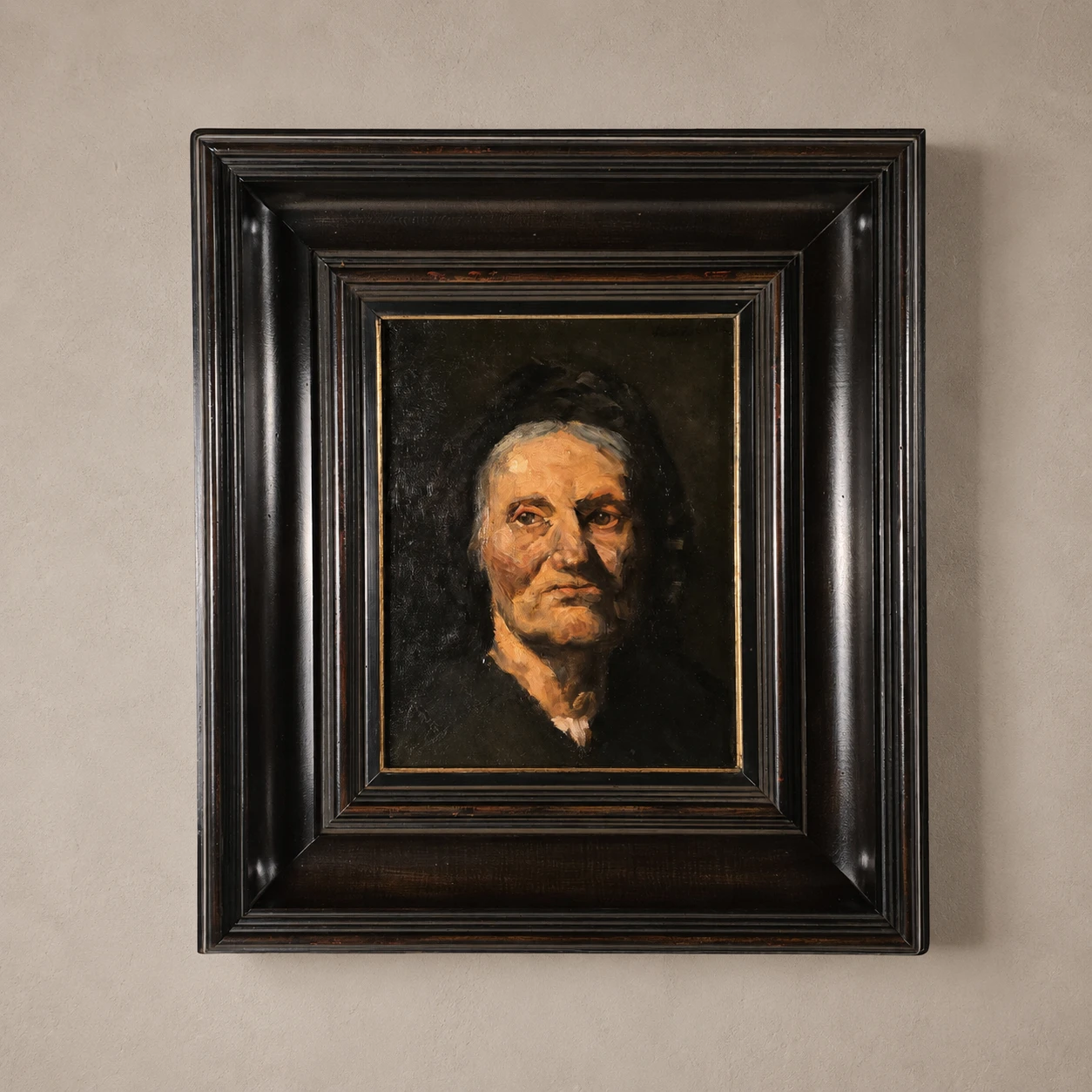
Suze Robertson portrait
An important name changes the equation. Suze Robertson has an established place in Dutch art history and is represented in major museum collections, including the Rijksmuseum. Rijksmuseum
We have here a portrait by Suze Robertson, an important name in Dutch art. Naturally, her name carries weight. But now look at the next painting.
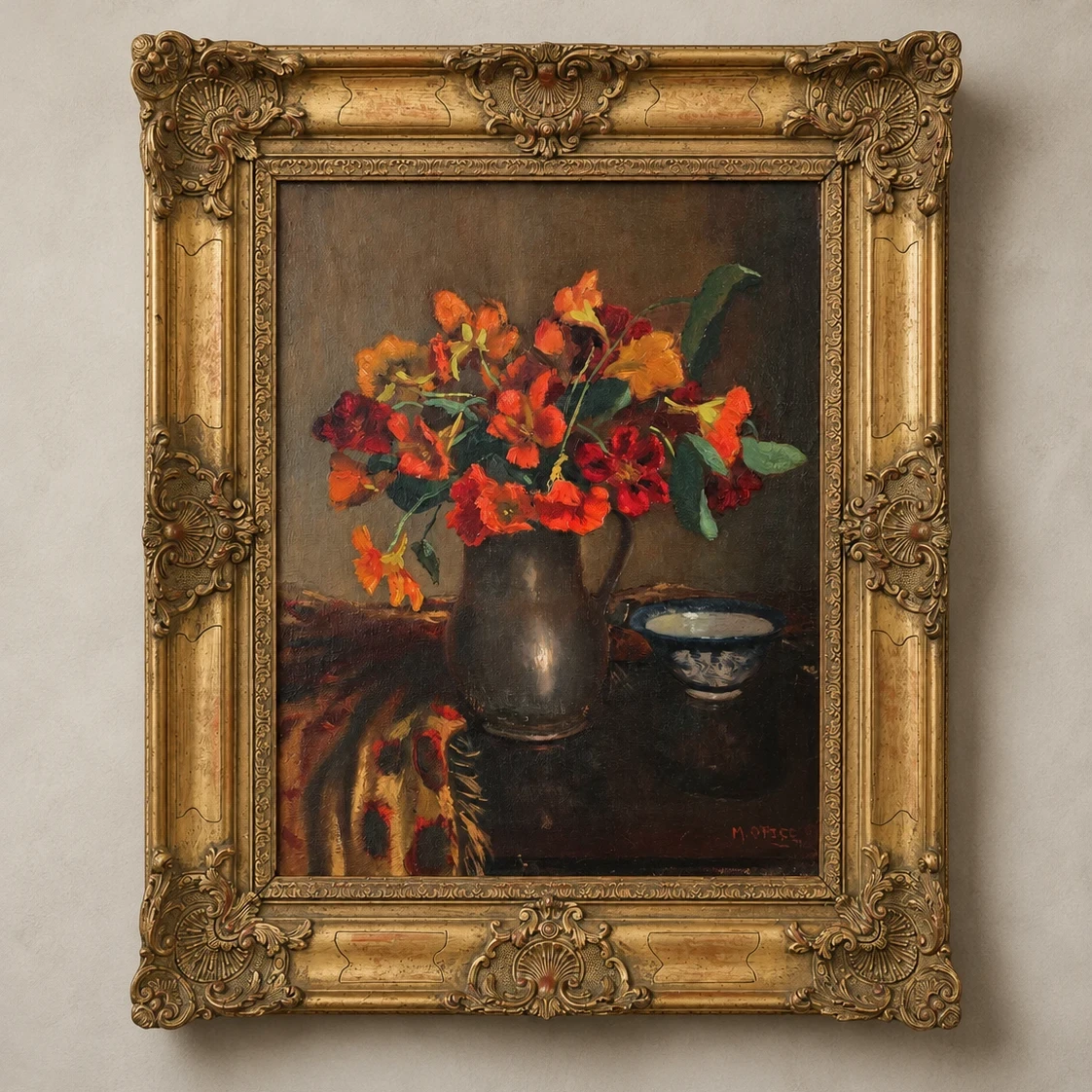
Marc Ottee flower still life
Marc Ottee (1898–1982). A good painting does not suddenly become less good because the artist's name is less expensive.
A flower still life by Marc Ottee. Beautifully handled, confident, decorative without becoming sweet.
The difference in market value can be considerable.
The difference in quality?
That is already a much more interesting discussion.
Look at the painting before you look at the signature
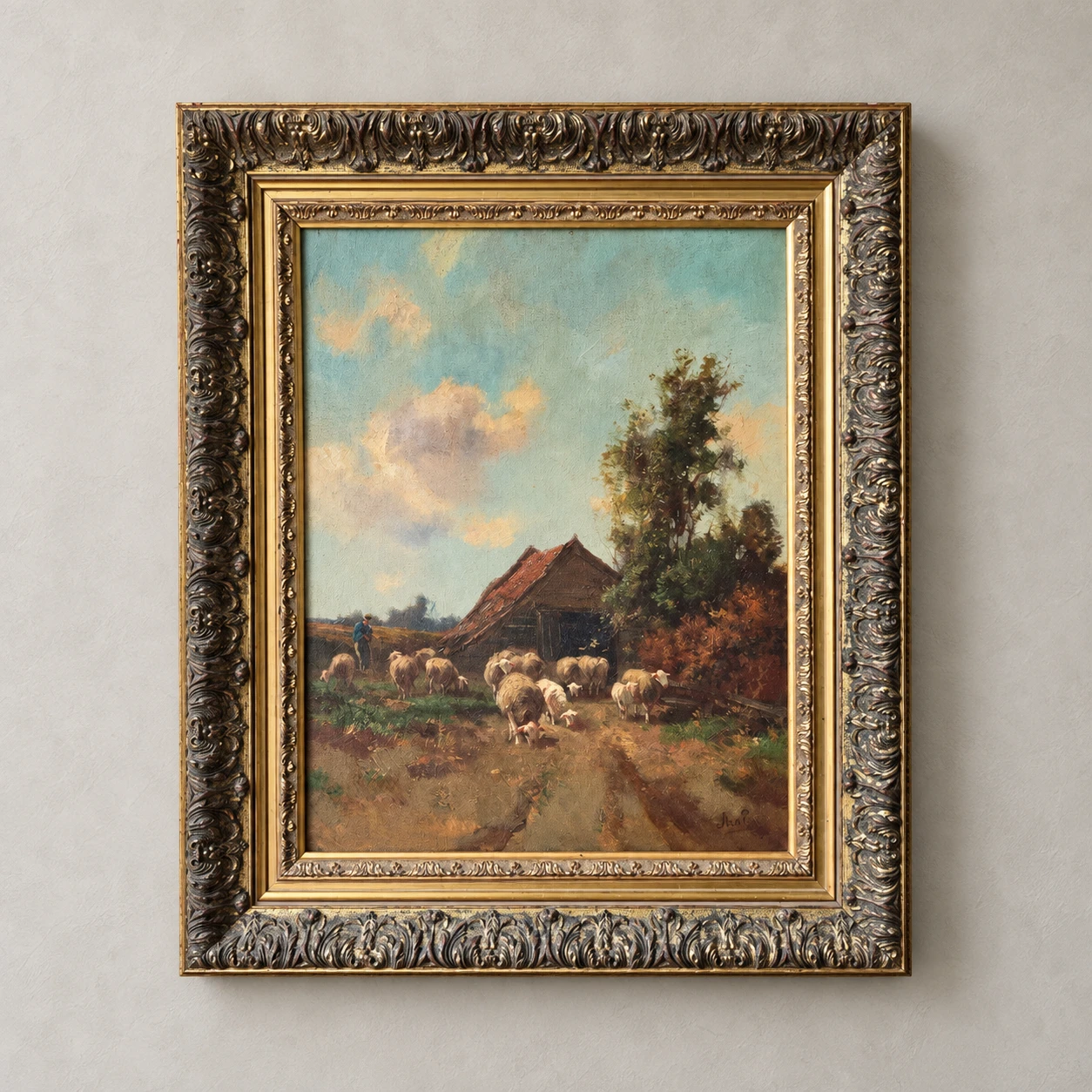
Arend van de Pol landscape
Arend van de Pol (1886–1956). A modest name perhaps, but certainly not a painting we should walk past without looking.
This is one of the habits I have developed over the years.
Does the composition work? Is there confidence in the brush? Does the artist understand light and colour? Is there atmosphere?
And, perhaps most importantly, do I want to look at it again?
This rural landscape is a good example.
Van de Pol doesn’t have the international market of a major twentieth-century name. But forget the signature for a moment and look at the painting: the enormous blue sky, the light, the small shepherd, the sheep, the road disappearing towards the farm.
There is quality here.
Only afterwards does the signature become interesting.
Of course, discovering an important name in the corner is rather pleasant.
We are art dealers, not saints.
But a famous signature cannot rescue a bad painting. And the absence of a famous signature does not make a good painting bad.
And then there are names that change everything
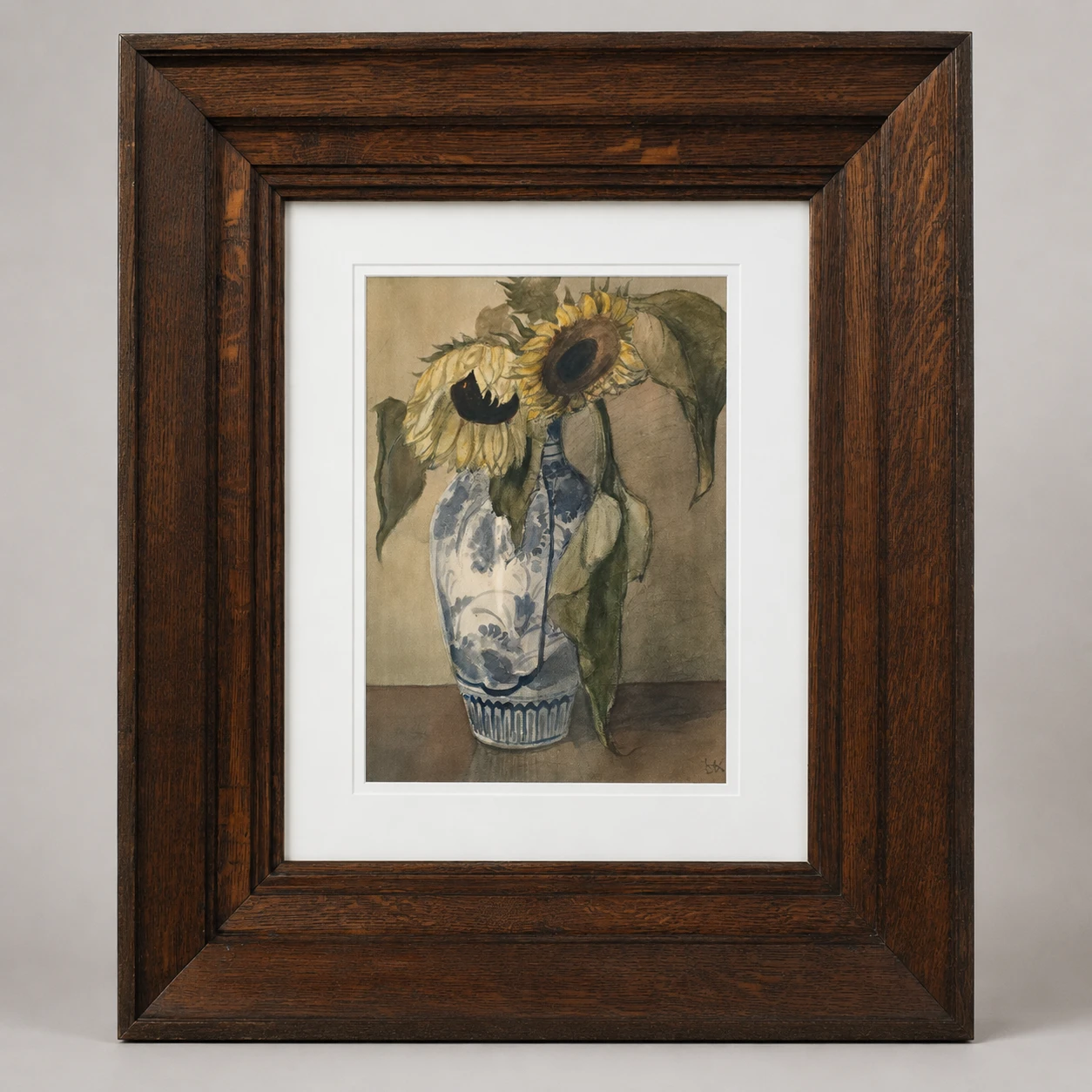
Otto Dix
Otto Dix (1891–1969). Here the name carries an entirely different historical and market significance.
With Otto Dix, we enter another category. Dix is one of the major figures associated with German New Objectivity, and his work belongs to major international museum collections. The Museum of Modern Art
Does that mean every work by Otto Dix is more beautiful than the Van de Pol landscape above?
No.
It means that we are no longer paying only for what is in front of us.
We are also paying for the artist’s place in art history, rarity,
provenance, scholarship, museum representation and decades of demand from collectors.
Those things are real. And they have real financial value.
But they are not the same thing as beauty.
The market and your wall are two different things
This, I think, is where collecting becomes really interesting.
If you are buying primarily as an investment, the artist’s market matters enormously.
If you are building a collection because you actually want to live with art, another question enters the room:
Which one would I like to take home?
A €500 painting by a relatively unknown artist may give you considerably more pleasure than a €5,000 work bought mainly because the signature impressed you.
That doesn’t make the €5,000 painting overpriced.
And it certainly doesn’t make the €500 painting a masterpiece.
It simply means that market value and artistic attraction are not the same measurement.
Learning to separate the two is one of the pleasures of collecting.
And then there is the frame…
A beautiful frame can add historical interest, presence and value.
It can also seduce us rather efficiently.
We know this from experience.
Sometimes we buy the painting because of the frame.
We admit it.
But a magnificent frame cannot make us love a painting we didn’t love in the first place.
Although it may persuade us to look at it twice.
So, €100 or €1,000?
There is no single answer.
Names matter. History matters. Condition, rarity, provenance and the market matter.
Quality matters too.
But perhaps the most useful lesson is a simpler one:
You don’t always need an important name to find a painting worth owning.
Sometimes the greatest pleasure is precisely the opposite: finding something by an artist almost nobody remembers, looking at it for a while and thinking:
This is actually very good.
And buying it before everybody else comes to the same conclusion.
Urbino Casa
Objects with a past, selected for interiors of today.